

Comparing: Unobstructed Ground
The Art of War 9:7.7-15: You can attack from some positions easily.

This post continues our project explaining each stanza of Sun Tzu’s work. The English translation and Chinese transliterations are from my award-winning book, The Art of War and The Ancient Chinese Revealed.
Due to our member’s generous support, we will send all our articles to all subscribers. To enjoy my work, consider becoming a free or paid subscriber.
This article discusses the second stanza the first section of Chapter 10 of The Art of War. This chapter’s general topic is the six types of terrain on which we compete. This stanza focus is on the first type of terrain: unobstructed ground. Its focus is on understanding the advantages, disadvantages, and defense of such terrain.
Unobstructed terrain must be evaluated in terms of how easy or difficult it makes our next advance. In some cases, we must also consider how such positions may affect our ability to retreat from advances that lead us into problems.
Obstacles are barriers to movement. When those barriers surround a terrain, they make it difficult to get into that area. However, they also make it easier to defend. One position’s obstacles are another position’s defense. Obstacles are one of the three dimensions that define the key differences among strategic areas, These three strategic dimensions are called dangers, distances, and obstacles. Unobstructed terrain has a minimum of obstacles.
Unobstructed terrain is an area with no or few other competitors. Opposing competing positions are the most common form of barrier. This is why new, unexplored territories are where we look for opportunities. Besides other competitors, however, there are other forms of obstacles as well: technological, monetary, regulatory, and so on, but in Sun Tzus time, the most unobstructed ground was the ground where no one was producing rewards. The ground is “open” with few positions on it.
Unobstructed
Sun Tzu starts with the advantage of this type of ground.
<I> <can> <by> <means> <of> <depart>
You can attack from some positions easily.
The English translation of this line of Chinese is narrower than its original meaning. We can <depart> this type of ground both to advance and to retreat. Unobstructed terrain is often used as temporary stepping-stones to stronger, nearby positions. It allows us to move easily in any direction, toward our goals or out of a bad situation. Positions developed in unobstructed terrain, can be built through alliances and later fortified.
It is easy and usually inexpensive to explore open terrain. When we find opportunities on them, we can explore those opportunities with little opposition.
<Mutually> <can> <by> <means> <of> <meeting>
Other forces can meet you easily as well.
One advantage of unobstructed or open terrains is that it allows different individuals or groups to come together, that is, join one another in alliances. This enables one of the nine common strategic situations, “highway ground,” (see this article), where position paths can intersect. Developing relationships with allies is an important early step in developing these positions. Alliances are made easier on open terrain because each competitor has an abundance of ground to choose from, more than they can develop on their own.
<Say> <unobstructed>
We call these unobstructed positions.
The internet was built so recently that we can see how it created various forms of unobstructed terrain at various points of time. The first open terrain was “need” for networked computers. People would see how connecting computers would make many tasks easier. The “need” was for a connection, a network, that when everywhere, enabling applications like email. This need for more and more connection was a very open terrain eventually stretching to the worldwide web. Then there was a need for websites so that people could organize the information on their local networks for easy access. More and more websites created the need for search engines. Search engine created the “need” for what we call AI. The process keeps opening more and more new territories, each of which in initially open to a new group of competitors.
Our ability to open up these new terrains has created more abundant competition as more and more competitors flood into each new area, exploring its opportunities.
<Unobstructed> <form> <is>
These positions are open.
The competitive areas that we tend to notice are those that have competitors. Truly open terrain are harder to see because there is nothing there, no competitors and no solution. We can see this at each new stage of Internet development. There may be problems there, but people usually don’t see problems as opportunities to create new terrain. When a new technology opens up a new terrain, it takes time for people to find what needs it creates. We can see this today because we have experience with new technology opening one new area after another.
<First> <reside> <high> <south,> <sunny> <hillside>
On them, be the first to occupy a high, sunny area.
Residing on “high, south, sunny, hillside” is means developing a highly visible position. Our first job in an open area is winning recognition, so can we be seen. We seek recognition, both for the value of the new ground and our position of a first mover by providing value from the ground. We do this either by selling products or attracting investors by promising such products.
<Advantage> <provisions> <way> <by> <means> <of> <battle>
Put yourself where you can defend your supply routes.
Both by selling products or attracting investors, those in these new territories soon find themselves competing for the rewards of the unobstructed ground. Competition is a comparison. They find ways to win rewards from them. As an open terrain attract more people and solutions to compare, those who are more successful, start investing their rewards in defense. They fortify their positions, creating barriers, blocking the once-open ground until it is no longer “open.”
<Then> <advantage>
Then you will have an advantage.
When we win these comparisons, we become the leader in what is no longer “open ground.” We have a position. Our advantage allows us to expand into the open areas around us, if they still exist. A well-known position create walls for defense.
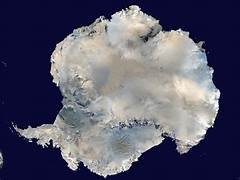
No of terrain of value ever “stable.” Whether was a talking about Antarctica, the ocean floow, or the far side of the moon, once value is found in that area, people will be competing for advantageous positions in that area.